Simon Shack is a researcher who developed an alternative model of the solar system called TYCHOS. This model proposes a 'geoaxial binary system' where Earth is at or near the centre, not orbiting the Sun as in the mainstream heliocentric model.

In the TYCHOS model, the Sun and Mars form a binary pair, meaning they orbit around a common centre of mass. Earth sits close to this centre point. The Sun is said to have Mercury and Venus as its moons, while Mars has Phobos and Deimos. The Moon orbits Earth and is described by some as functioning like a 'driveshaft' in the system.
The model is based on the work of Tycho Brahe, the 16th-century Danish astronomer who created a compromise between the Earth-centred (like flat Earth) and Sun-centred models of the solar system.
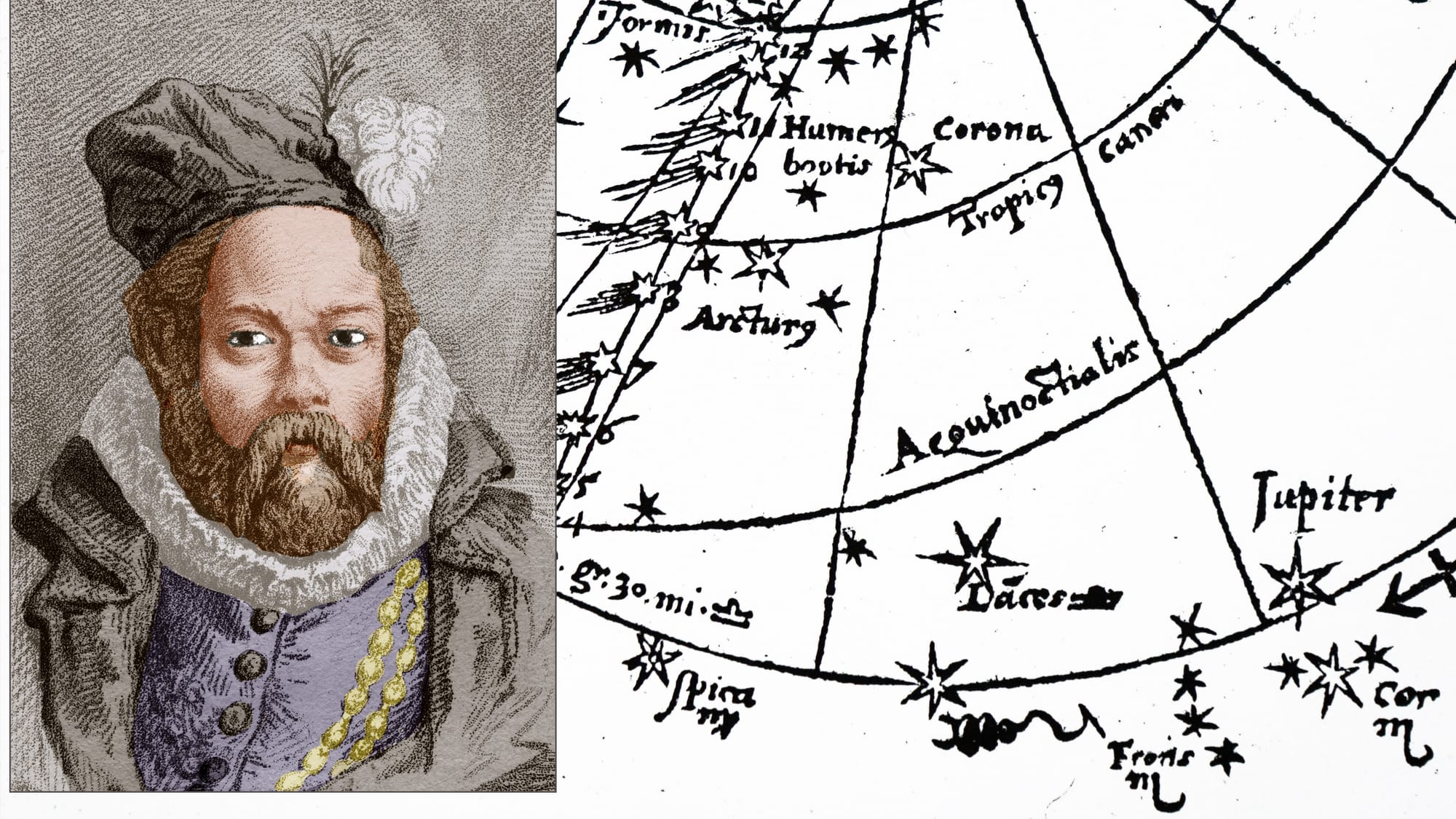
His original system had Earth stationary at the centre, with the Sun orbiting Earth and the other planets orbiting the Sun.
Simon describes TYCHOS as a modern evolution of Brahe's ideas, updated with contemporary understanding of binary star systems.
I gloomily came to the ironic conclusion that if you take a highly intelligent person and give them the best possible, elite education, then you will most likely wind up with an academic who is completely impervious to reality.
— Halton Arp, astronomer
🎙️ Podcast episode
This was a complicated episode, despite being driven by visuals. I recommend watching instead of listening.
Obviously, there is no audio version, but that doesn't mean you shouldn't subscribe to my podcast on Apple, Spotify, or whichever app you use.
I find the TYCHOS model quite persuasive in its elegance, but due to its complexity, I will invite Simon back for a simpler discussion.
From these considerations then it is clear that the earth does not move and does not lie elsewhere than at the centre.
— Aristotle